
Where East Palo Alto City Directories Live
East Palo Alto appears inside a regional Palo Alto directory sequence even though the city is in San Mateo County. The core shelf is Stanford Green Library, call number F869.P2A18. It starts with late nineteenth-century issues and reaches a held R.L. Polk volume from 1978. A second shelf at Palo Alto Public Library, call number 979.473 P769p, fills many gaps. The holdings are not a single continuous run, so the year and publisher matter before any absence is treated as evidence.
| Collection | Years | Where Held | Access |
|---|---|---|---|
| D.C. Kinkead and Stanford University Press city directories | 1896/97, 1897/98 | Stanford Green Library, F869.P2A18 | Ask Stanford for the volume |
| C.D. Hauverman directory | 1899/1900 | Stanford Green Library | Library collection access |
| Palo Alto Times Press and Palo Alto Times issues | 1900/01, Jan. 1903, Jan. 1904 | Stanford Green Library | Library collection access |
| Times Publishing Co., A.T. Griffin, and related early issues | Dec. 1904, 1906-08, 1910-11 | Stanford Green Library | Publisher varies in inventory |
| Willis Hall city directories | 1914/15-1925 | Stanford Green Library | Library collection access |
| R.L. Polk city directories | 1926-39, selected 1944-1978 issues | Stanford Green Library | Street section from 1926 |
| Palo Alto Public Library local holdings | 1895 through 1968 gaps and 1940s-1960s issues | Call 979.473 P769p | Ask at the reference desk |
The Stanford inventory notes that 1943 and 1945 were not published. The Palo Alto Public Library list includes 1895, 1895/96, 1901/02, 1902, 1905/06, 1912/13, 1940-42, 1948, 1950, 1953, 1955, 1957, 1959/60, 1962-63, 1965, and 1968. Ask the East Palo Alto Library to search the Peninsula Library System catalog by title variants before making a trip, because its public pages do not publish a year-by-year shelf list.
The Stanford Historical Society directory inventory is the source for the regional shelf and its publisher sequence.
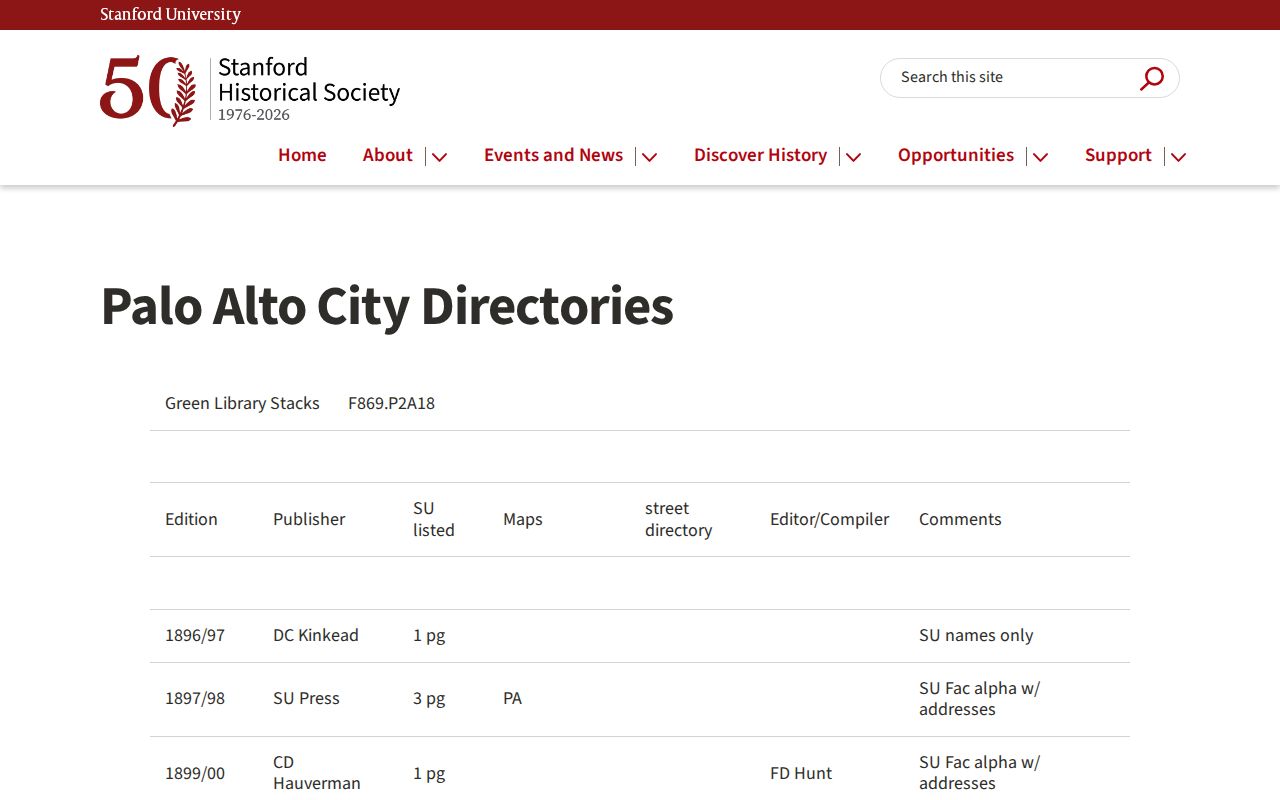
The regional listing keeps a title search from stopping at the words East Palo Alto. That wider search is the key to finding the earlier households.
The East Palo Alto City Directory Timeline
The directory spine changes hands over time. Publisher names are useful clues because an address may be indexed in one volume but absent from another. The early books are tied to Palo Alto Times printing and later issues settle into the Willis Hall and R.L. Polk runs.
- 1896/97-1904. Kinkead, Stanford University Press, Hauverman, Palo Alto Times Press, Palo Alto Times, Agnes S. Ritchie, and Times Publishing appear in the early sequence.
- 1906-1911. The Stanford inventory lists 1906-08 and 1910-11, with the publisher not specified in that portion of the record.
- 1914/15-1925. Willis Hall volumes carry the regional directory through the years before the street-address section.
- 1926-1939. R.L. Polk issues add the street-directory section, which makes a house-number search possible after locating the street.
- 1940s-1960s. The shelf is selective. The inventory marks no 1943 or 1945 publication and lists separate Palo Alto Public Library issues for several gaps.
- 1969-1978. Selected R.L. Polk volumes continue through 1976, with 1978 recorded as the last held issue in the Stanford inventory.
These dates describe held or listed editions, not proof that every resident appeared in every year. A first appearance can reflect a canvass, a spelling change, a shift in geographic title, or an unlisted telephone entry. A missing year should be bracketed with nearby books, newspapers, and census evidence.
The digitized Palo Alto directory search adds a practical screen for volumes that have been scanned or cataloged online.
A digital hit can reveal a useful page or title, but the catalog record still controls the edition, year, and geographic scope.
East Palo Alto Directories Use Regional Titles
East Palo Alto was not incorporated until July 1, 1983. Earlier city-style records sit with county or predecessor jurisdictions, and the directory title follows the publisher's regional map rather than a later city boundary. NARA's 1930 inventory describes Palo Alto volumes that include North Palo Alto, East Palo Alto, Ravenswood, Stanford University, and Menlo Park. That is why a search limited to a modern city name can miss the right household.
Ravenswood and Runnymede were used into the 1920s, while East Palo Alto became a common name by that decade. Runnymede's 1916-1930s poultry colony and one-acre or five-acre lots also help explain why an older directory address may not match a modern parcel line. Search the place name, the street, and the household surname together.
Local context matters when a name is spelled in more than one way. The East Palo Alto Census QuickFacts reports that 44.1% of residents are foreign-born and 65.9% speak a language other than English at home. Older records also reflect Ohlone and Costanoan people, Chinese laborers, Asian and Italian flower growers, and postwar communities. Those histories support careful variant searches, not assumptions about a surname.
The National Archives 1930 city-directory inventory confirms the wider Palo Alto coverage.
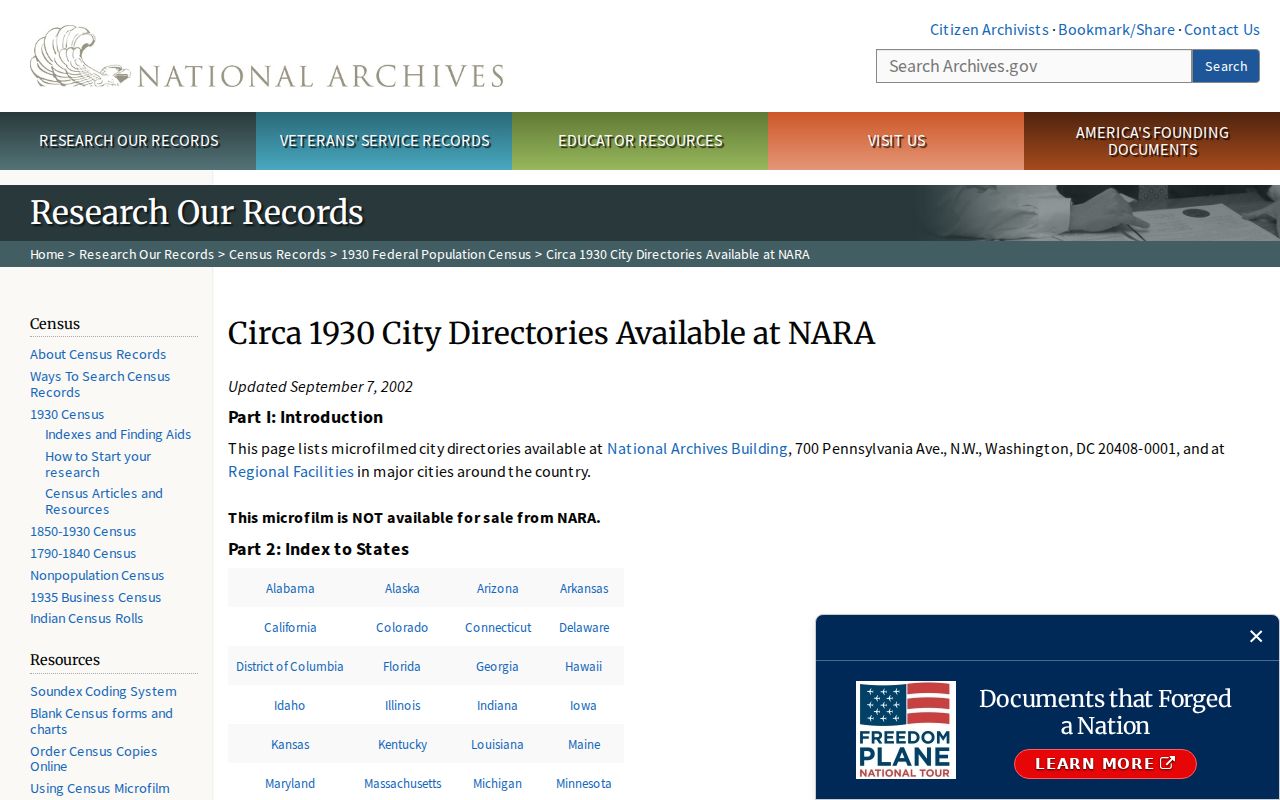
The NARA geography is a useful bridge between the printed city directory and the 1930 census schedule.
Reading East Palo Alto Directory Entries
A city directory entry usually starts with a surname and given name, then gives a street address or house number. The exact fields vary by publisher and year. Later regional books can include a separate street section, while an alphabetical entry may carry cross-references or household notes. An abbreviation key in the front matter must be read before interpreting a mark.
| Name | The listed person or household lead, with spelling and initials copied as printed. |
|---|---|
| Address | House number and street, which can be compared with a later or earlier entry. |
| Occupation field | A historical descriptor that may help separate people with the same name. |
| Household note | Some editions use spouse, widow, or cross-reference marks, but the meaning is edition-dependent. |
| Street section | The address-order half of later volumes, beginning with the Polk era in 1926. |
- Criss-cross directory
- An address-ordered section that reverses the name-first search and lists a person or business at a street location.
- Householder index
- A name or household listing used to locate an address before checking the full entry.
- Abbreviation key
- The publisher's explanation of short marks, normally found near the front of the volume.
Copy the entry exactly before normalizing a name. A letter that looks like a middle initial may be part of a surname, and a short mark can mean something different in a different publisher's book.
The 1926 East Palo Alto Street Section
The street section is the distinctive address tool in the R.L. Polk volumes held from 1926 forward. Start with a known street and house number, record the name as printed, then return to the alphabetical section for any detail attached to that name. The method works for past households because it begins with the place rather than assuming a surname.
Use the street section with caution around the 1939 San Mateo County street renumbering. The historic inventory reports that many residences and street names changed to remove duplicate East, North, and Palo Alto addresses. A modern street string may therefore point to the wrong page unless the address is bridged with a parcel number, legal description, recorded map, or a nearby census entry.
For current address-keyed ownership and parcel work, the East Palo Alto street directory follows the county map, APN, and recorder chain rather than rebuilding the historical shelf.
Note: A street-directory absence can mean a gap, a changed address, an unlisted entry, or a different geographic title, not that no household was present.
Libraries Behind the East Palo Alto Directory
The Palo Alto Public Library genealogy and local-history service brings together Ancestry Library Edition, HeritageQuest, HeritageHub, NewsBank, and local-history help. Ancestry Library Edition is available at a library location or on its Wi-Fi, not through remote home access. HeritageQuest supports census and local or family histories, while HeritageHub is suited to obituaries and death notices.
The East Palo Alto Library at 2415 University Avenue is part of San Mateo County Libraries. Its published local contact is eastpaloalto@smcl.org and 1-833-YES-SMCL. Ask staff to search the Peninsula Library System catalog using Palo Alto, East Palo Alto, Ravenswood, Runnymede, Polk, telephone directory, and reverse directory. Palo Alto Rinconada's Local Interest collection and Stanford Green Library are additional physical stops.
The library's genealogy and local-history resources show the kind of fallback that matters when a city directory is not digitized. The California State Library collections and state archives add another catalog and research-room route when a local shelf is thin.
Palo Alto genealogy and local-history resources show the nearby library fallback for directory research.
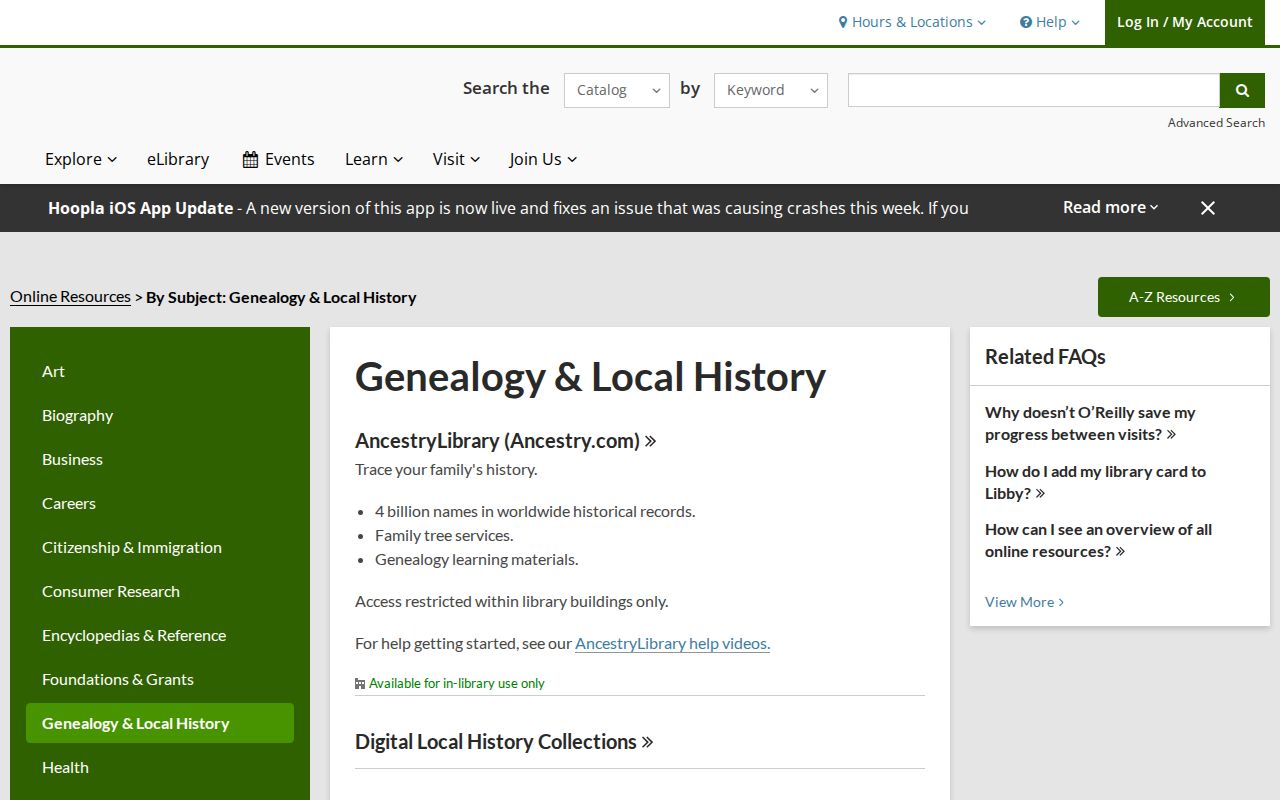
Library databases can fill name, obituary, and census gaps, but each database has its own access rule and coverage date.
East Palo Alto Directory Clues in Newspapers
Digitized local newspapers are a strong companion when an issue was not published or a household disappears from a city directory. The Palo Alto Library collection includes the Mayfield Enterprise from 1870-1871, Palo Alto Times from 1893 through 1905, Palo Alto Live Oak from 1896 through 1903, Palo Alto Press from 1901-1902, Daily Palo Alto from 1902, Citizen from 1904-1905, Palo Altan from 1905-1906 and 1912-1914, and Daily Palo Alto Times from 1908-1918.
Search scans by surname, place, year, and street. A newspaper notice can supply a move, death, civic role, business tie, or road name that makes a directory entry easier to identify. The Local News Index reaches 1989, and the obituary index reaches from 1890 to the present. Those indexes point toward a source, so record the date and page before drawing a conclusion.
The Palo Alto Library digitized newspaper collection is the relevant public search channel.
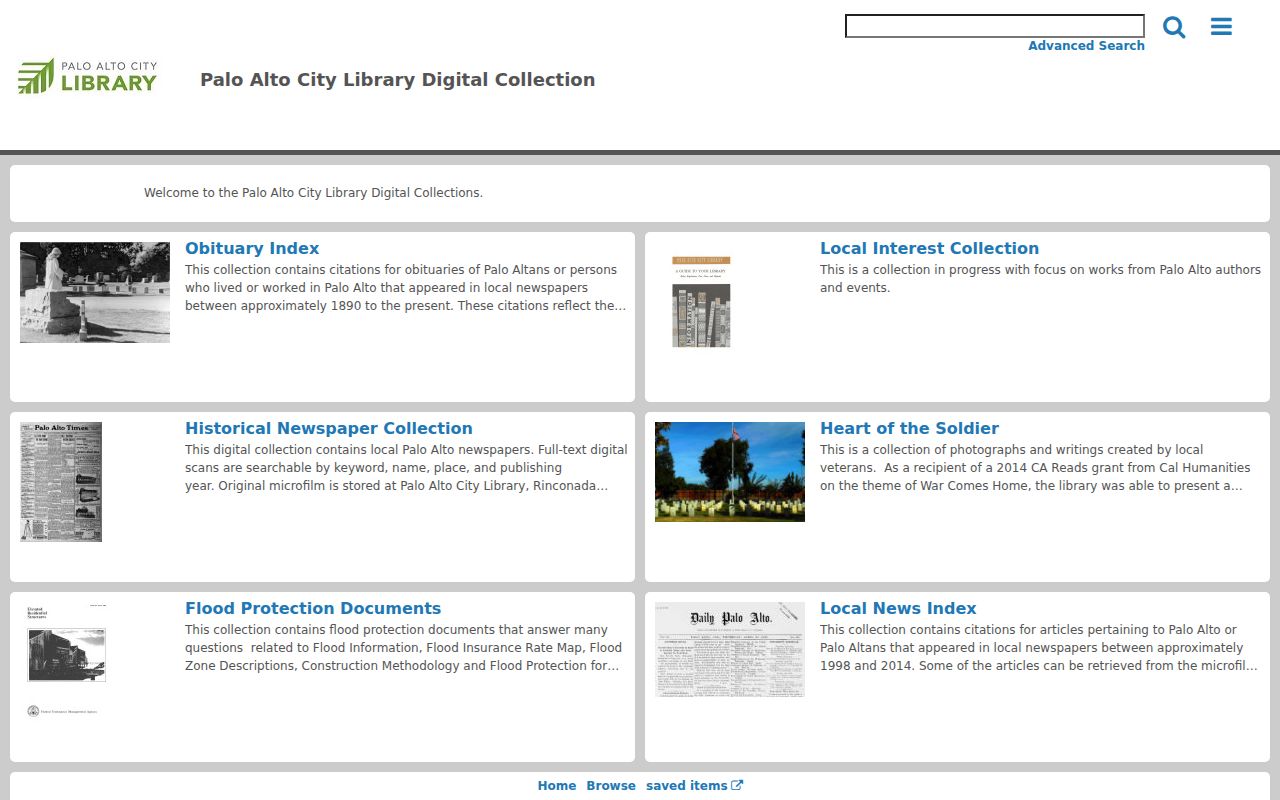
Newspaper language can preserve a place name that a later directory has dropped, which helps bridge regional titles.
Pairing East Palo Alto Directories With Census
A city directory offers annual or near-annual address snapshots. A census records a household on an enumeration date. Pairing the two can show whether a name stayed at an address, moved between counts, or was listed under a different place label. The latest public federal census is 1950 under the 72-year rule.
- Choose a directory year and copy the printed name, address, and place label.
- Match the address and household in the 1930, 1940, or 1950 census, allowing for ward and enumeration geography.
- Compare age, birthplace, household relationship, and the historical occupation field instead of relying on a name alone.
- Check the next directory year and nearby newspaper indexes for a move, death notice, or spelling change.
NARA's 1930 inventory is especially useful because its Palo Alto volumes explicitly include East Palo Alto and Ravenswood. A mismatch still needs review: directories and census schedules were created for different purposes, and street renumbering can break a simple text match.
Note: A directory year can be absent because no volume was published, including the documented 1943 and 1945 gaps, rather than because a household left.
East Palo Alto Directories for Family History
For family history, begin with the strongest known address or surname and work across more than one source. The regional city directory can establish a name and place. Newspapers can add a notice or local event. Census schedules can test the household relationship. The San Mateo County Genealogical Society adds county indexes, cemetery and mortuary material, directories, yearbooks, county histories, and the Schellens Collection, which abstracts directories, Great Registers, county record books, and newspapers from 1852-1975.
Naturalization certificates held by the County Clerk cover 1800-1991 and can bridge an immigration or name-change question. The National Archives at San Francisco covers federal records for Northern California. The Palo Alto directory collections are best treated as one layer in that chain, not as a complete list of every person who lived in East Palo Alto.
- Record the exact printed entry and the volume's abbreviation key.
- Follow the name through adjacent years and note each address change.
- Use the street section from 1926 onward to test other households at the same address.
- Search newspapers, census schedules, SMCGS indexes, and obituary material for an endpoint.
When a historical find needs a present-day identity check, a separate East Palo Alto resident lookup should compare two stable records and keep an index entry distinct from a certified document.
The East Palo Alto Community Archive collections catalog adds community-created newspapers, oral histories, videos, and incorporation records.
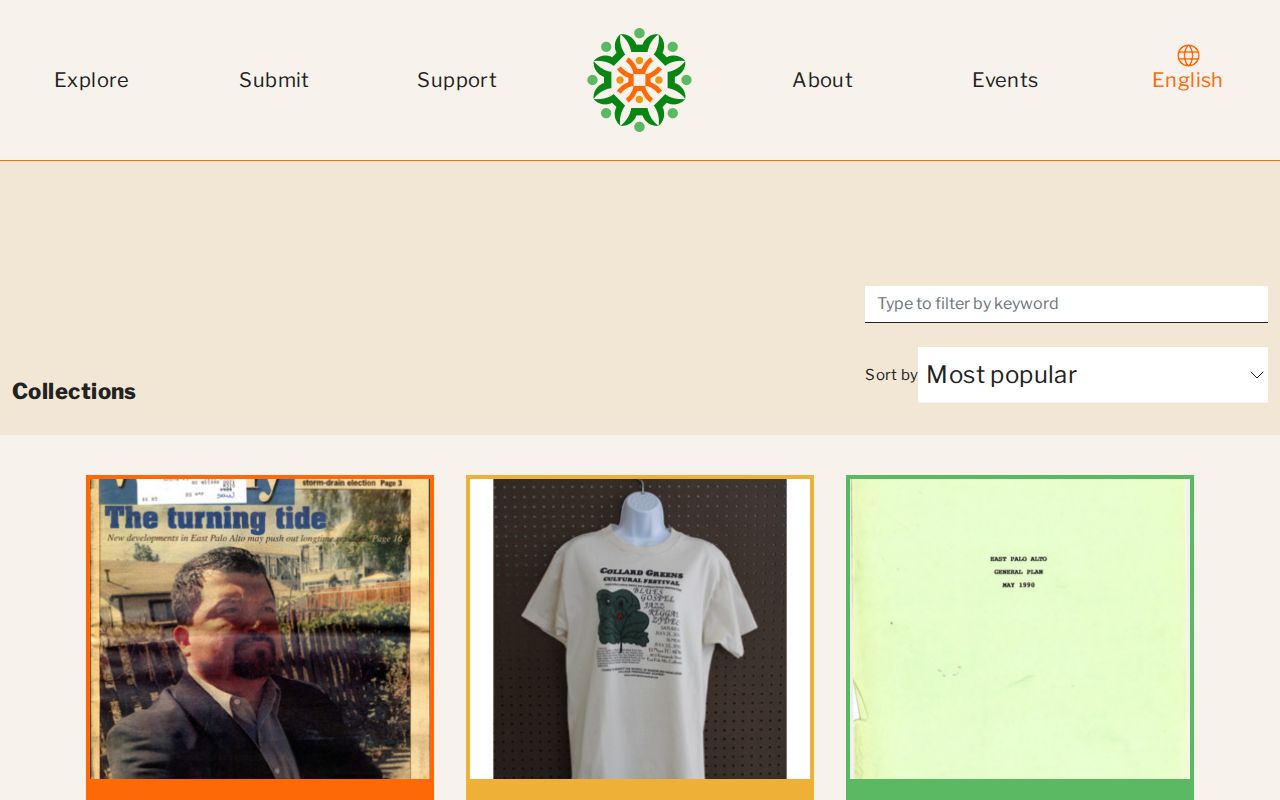
EPACA's collections are historical and consensual. They add community memory, not a current resident roll.